10 Atheists Who Engage Religion Charitably
by Artur Rosman
Filed under Atheism, Religion
David Bentley Hart is one of our foremost theologian-philosophers, an American intellectual treasure who has ransacked the thesaurus while writing books such as The Beauty of the Infinite, The Doors of the Sea: Where Was God in the Tsunami?, and the recent The Experience of God. One of the things I enjoy about his writing is how he rightfully gives credit to Nietzsche for recovering the scandalous nature of Christianity. In The Beauty of the Infinite he goes as far as saying: "Nietzsche... Read More
Soft Atheism and Rational Religion
by Bishop Robert Barron
Filed under Atheism
A very instructive exchange between Gary Gutting, a philosophy professor at Notre Dame, and Philip Kitcher, a philosophy professor at Columbia, just appeared in the pages of The New York Times. Kitcher describes himself as a proponent of “soft atheism,” which is to say an atheism distinct from the polemical variety espoused by Richard Dawkins and Christopher Hitchens. Unlike his harsher colleagues, Kitcher is willing to admit that religion can play an ethically useful role in a... Read More
Faith and Unbelief: An Interview with Dr. Stephen Bullivant (Video)
by Brandon Vogt
Filed under Atheism, Interviews

Dr. Stephen Bullivant has long been one of our most popular contributors here at Strange Notions. Atheists appreciate his respectful, fair-minded articles while Catholics value his careful articulation of what Catholicism actually teaches about atheism. Stephen has authored two books, The Salvation of Atheists and Catholic Dogmatic Theology (Oxford University Press, 2012) and Faith and Unbelief (Canterbury Press, 2013; Paulist Press, 2014). He also just released a massive tome that he... Read More
What is an Ad Hominem Fallacy?
by Dr. Edward Feser
Filed under Culture
NOTE: Dr. Feser's contributions at Strange Notions were originally posted on his own blog, and therefore lose some of their context when reprinted here. Dr. Feser explains why that matters. As students of logic know, not every appeal to authority is a fallacious appeal to authority. A fallacy is committed only when the purported authority appealed to either does not in fact possess expertise on the subject at hand, or can reasonably be supposed to be less than objective. ... Read More
Top 10 Tips for Atheists When Engaging Christians
by John Dickson
Filed under Atheism

As an intellectual movement, Christianity has a head start on atheism. So it's only natural that believers would find some of the current arguments against God less than satisfying. But in the interests of a more robust debate, I want to offer my tips for atheists wanting to make a dent in the Faith. I've got some advice on arguments that should be dropped and some admissions about where Christians are vulnerable. Before beginning, though, I want to point out that these tips don't necessarily... Read More
Why It’s Okay To Speak Religiously in the Face of Tragedy
by Marc Barnes
Filed under The Problem of Evil

True suffering — whether in death, disaster, or disease — is united by the fact that we hate it. Our beings reject it, our minds refuse to comprehend it, our bodies are sickened by it, and it’s all a simple matter of definition: To suffer is to experience that which we do not want to experience. Now it’s impossible, from a purely secular standpoint, to answer the question of why we suffer. For if there were a good reason for our suffering, then that suffering would become tolerable... Read More
Moral Relativism, Conscience, and G.E.M. Anscombe
by Joe Heschmeyer
Filed under Objective Morality

What should we make of the proposal that there's no such thing as objective morality, that morals are just determined by cultures or by individuals? That's what I'd like to address in this post. I specifically engage the cultural relativism advocated by Ruth Benedict, who claimed that “good” and “evil” are socially determined. I argue instead for the moral absolutism advocated by the British Catholic analytical philosopher Elizabeth Anscombe (G.E.M. Anscombe). This post will proceed... Read More
Why It’s Okay to be Against Heresy and for Imposing One’s Will on Others
by Bishop Robert Barron
Filed under Culture
Recently, two prominent Catholic women—Kathleen Sebelius in an address to the graduates of Georgetown University’s public policy school, and Maureen Dowd in a column published in the New York Times—delivered strong statements about the Church’s role in civil society. Dowd’s column was more or less a screed, while Sebelius’s address was relatively measured in tone. Yet both were marked by some pretty fundamental misunderstandings, which have, sadly, become widespread.... Read More
From Atheism to Catholicism: An Interview with Jennifer Fulwiler (Video)
by Brandon Vogt
Filed under Atheism, Conversion, Interviews
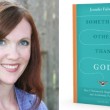
In Augustine's Confessions, the first Western autobiography ever written, we discover the probing journey of a brilliant man, traveling through a maze of philosophies before emerging into the light of Christianity. The destination brought him to tears for though he sensed Christianity to be true, it was the last place he expected to turn. Years later, when Oxford professor C.S. Lewis embarked on his own pursuit of truth, he too ended up at Christianity, converting with great hesitancy:... Read More
How Jesus Became God: A Critical Review
by Trent Horn
Filed under Book Reviews, Jesus
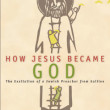
NOTE: Last week we featured a brief reflection by Fr. Robert Barron on biblical skeptic Bart Ehrman's new book, How Jesus Became God: The Exaltation of a Jewish Preacher from Galilee (HarperOne, 2014). Today we feature a more in-depth review by Trent Horn. Most Christians say the apostles came to believe Jesus was God after seeing how Christ’s resurrection vindicated his claims to divinity. But Bart Ehrman’s newest book, How Jesus Became God: The Exaltation of a Jewish Preacher... Read More