
Why Evil and Suffering Don’t Disprove God
by Brandon Vogt
Filed under The Existence of God

NOTE: Today's post is in response to Steven Dillon's post, "Why I Don't Think God Exists." I’d like to begin responding to Steven Dillon’s guest post on God’s existence by complimenting his thoughtful and candid writing. I especially appreciated his opening paragraph where, with great vulnerability, Steven acknowledged that he wished God existed. Some atheists desire just the opposite. The philosopher Thomas Nagel admitted in his book, The Last Word: “I want atheism to... Read More
Why I Don’t Think God Exists
by Steven Dillon
Filed under The Existence of God

NOTE: Today we feature a guest post from Steven Dillon, one of our regular atheist commenters. Be sure to read Brandon Vogt's response, "Why Evil and Suffering Don't Disprove God". I wish that God existed, I genuinely do. His presence would be an invaluable source of hope and strength as well as peace and happiness.[ref]Cf. http://www.ryerson.ca/~kraay/Documents/2013CJP.pdf for an interesting discussion on whether God’s existence would be a good thing.[/ref] But, I don’t think... Read More
Why Jesus is God: A Response to Bart Ehrman
by Bishop Robert Barron
Filed under Jesus

Well, it’s Easter time, and that means that the mainstream media and publishing houses can be counted upon to issue de-bunking attacks on orthodox Christianity. The best-publicized of these is Bart Ehrman’s latest book How Jesus Became God: The Exaltation of a Jewish Preacher from Galilee. Many by now know at least the outlines of Ehrman’s biography: once a devout Bible-believing evangelical Christian, trained at Wheaton College, the alma mater of Billy Graham, he saw the light... Read More
The Five-Fold Argument for the Resurrection
by Joe Heschmeyer
Filed under The Resurrection
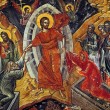
The New Testament consists of first-century, seemingly first-hand accounts of the life, death, and resurrection of Jesus Christ. It also claims to be an eyewitness account and makes some mighty bold claims about what the authors saw and heard. Yet a first-century audience (that is, an audience which would have been able to call "shenanigans" if the authors were just making things up) believed these accounts, copied them, and spread them both textually and orally throughout the entire Roman... Read More
Fathers of Science
by Dr. Matthew Bunson
Filed under Christianity and Science
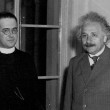
On March 12, 2008, the John Templeton Foundation made the announcement of the winner of its annual Templeton Prize, which honors achievements engaging the great questions of life and the universe. The $1.6 million prize for 2008 went to Michał Heller, a Polish cosmologist and professor in the faculty of philosophy at the Pontifical Academy of Theology in Cracow, Poland. What makes Heller additionally remarkable is that he is a Catholic priest. The 72-year-old planned to spend the prize... Read More
Why Our Unique Solar System Points to God
by Thomas McAvoy
Filed under Cosmology

In an earlier post on this site titled "How Contemporary Physics Points to God", Fr. Robert Spitzer addresses the Big Bang and the five anthropic conditions that exist in of our universe. These anthropic conditions lead to intelligent life on our planet. Concerning the anthropic conditions Fr. Spitzer writes: “The odds against all five of the anthropic coincidences happening randomly is exceedingly and almost unimaginably improbable. Most reasonable and responsible individuals would... Read More
Why History isn’t Scientific (And Why it Can Still Tell Us About the Past)
by Tim O'Neill
Filed under History

In April last year, Grundy, the author of the Deity Shmeity blog, wrote a post titled "History Isn't My Area". He commented on the release of Bart Ehrman's critique of Mythicism, Did Jesus Exist?: The Historical Argument for Jesus of Nazareth. Unlike the majority of actual historians, many prominent atheists find Jesus Mythicism convincing and many of them are unhappy with the generally sceptical and highly renowned Ehrman for criticizing this idea. Grundy, for his part, stated... Read More
Nothing’s the Matter with Atheistic Materialism
by Joe Heschmeyer
Filed under Atheism

The central problem with atheistic materialism is nothing, really. Metaphysical nothing, to be exact. Any worldview, including atheism, should be able to give some sort of coherent answer to the rudimentary question of why the universe exists. I don't mean “why does this universe exist rather than another?” I mean, “why does there exist anything, rather than nothing?” Dr. Victor Stenger, in a recent Huffington Post piece on how to debate religion, claims to have an answer. It... Read More
The Gods of Israel: Does the Bible Promote Polytheism?
by Dr. Matthew Ramage
Filed under The Bible

“What great nation is there that has a god so near to it as the LORD our God is to us, whenever we call upon him?” This passage from the Book of Deuteronomy was recently proclaimed in the Catholic Church’s Lenten liturgy, and it touched right at the heart of something I have been pondering for some time: evidence of polytheism in the Bible and the relationship between ancient Israelite and Canaanite religious traditions. Popular critics of the Judeo-Christian God frequently focus... Read More
Atheism, Philosophy, and Science: An Interview with Dr. Michael Ruse
by Brandon Vogt
Filed under Atheism, Christianity and Science, Interviews

As a young undergraduate at Florida State University, studying mathematics and engineering, I had no idea that one of the world's leading philosophers of science worked just a couple buildings away. Had I known about Dr. Michael Ruse then, I would have jumped at the chance to meet him. He's since become one of my favorite atheist writers, displaying a sharp mind and a good will, free of needless polemics. (He's also not afraid to tattoo extinct marine arthropods on his arm if dared.) This... Read More