Sex, Love, and God: The Catholic Answer to Puritanism and Nietzcheanism
by Bishop Robert Barron
Filed under Sexuality

Many of the Catholic Church’s teachings are vilified in both the high and popular cultures, but none more than its doctrines concerning marriage and sexuality. Time and again, the Church’s views on sex are characterized as puritanical, life denying and hopelessly outdated — holdovers from the Bronze Age. Above all, critics pillory the Church for setting unreasonable limits to the sexual freedom of contemporary people. Church leaders, who defend traditional sexual morality,... Read More
Deciding to Believe
by Matt Fradd
Filed under Belief

Sometimes, after reflection and study, people feel that they can’t decide between atheism and belief in God. Where they are at that moment, the evidence seems too evenly weighted or too difficult to evaluate. What then? If these are the two belief systems that you feel torn between then there are two basic choices: You could choose to go ahead and believe in God or you could refrain from doing so. If it seems impossible to decide between these options based on the evidence then one can... Read More
So You Think You Understand the Cosmological Argument?
by Dr. Edward Feser
Filed under The Existence of God

NOTE: Dr. Feser's contributions at Strange Notions were originally posted on his own blog, and therefore lose some of their context when reprinted here. Dr. Feser explains why that matters. Most people who comment on the cosmological argument demonstrably do not know what they are talking about. This includes all the prominent New Atheist writers. It very definitely includes most of the people who hang out in Jerry Coyne’s comboxes. It also includes most scientists. ... Read More
Unpacking the First Cause Argument for God
by Dr. Peter Kreeft
Filed under The Existence of God

The most famous of all arguments for the existence of God are the "five ways" of Saint Thomas Aquinas. One of the five ways, the fifth, is the argument from design, which we looked at in the last essay. The other four are versions of the first-cause argument, which we explore here. The argument is basically very simple, natural, intuitive, and commonsensical. We have to become complex and clever in order to doubt or dispute it. It is based on an instinct of mind that we all share: the... Read More
What Is the Difference Between Creation, Evolution, and Intelligent Design?
by Jimmy Akin
Filed under Cosmology, Evolution

What's the difference between creation, evolution, and intelligent design? Creationism, Evolutionism, and Intelligent Design are three of the major positions on the question of how we got here. What’s the difference between these positions? That seemingly straightforward question proves surprisingly controversial. Let’s take a look at it . . . The Basic Question The basic question at issue in the contemporary origins debate is whether or not the world was created. It could... Read More
The Preachings of F. Scott Fitzgerald
by Bishop Robert Barron
Filed under Movies/TV

The appearance of yet another film version of F. Scott Fitzgerald’s The Great Gatsby provides the occasion for reflecting on what many consider the great American novel. Those who are looking for a thorough review of the movie itself will have to look elsewhere, I’m afraid. I will say only this about the movie: I think that Baz Luhrmann’s version is better than the sleepy 1974 incarnation, and I would say that Leonardo DiCaprio makes a more convincing Gatsby than Robert Redford.... Read More
Turning the Problem of Evil On Its Head
by Joe Heschmeyer
Filed under Objective Morality, The Problem of Evil

Many atheists are fond of using the argument from evil to debunk the notion of God. It goes something like this: If God is all-powerful (omnipotent), He could stop evil. If God is all-loving (omnibenevolent), He would stop evil if He could. Therefore, if an omnipotent, omnibenevolent God existed, evil would not. Evil exists; therefore, an omnipotent, omnibenevolent God does not. Another variation of the argument was put forward by the Greek philosopher Epicurus, centuries before the... Read More
John Henry Newman: Real, Rational, Religion
by Daniel McGiffin
Filed under Belief
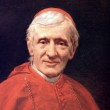
In the late nineteenth century, Catholic-convert Blessed John Henry Cardinal Newman published one of the all-time greatest works on the epistemology of faith. Essay in Aid of the Grammar of Assent was written in response to trends in thought widespread in 19th c. Oxford. Since the Enlightenment (and before) the Catholic Church has been criticized for the dogmatic structure of its faith and morals. People like Immanuel Kant and David Hume have spoken of dogma as if it were a leash or blinders,... Read More
The Dove and the Soapbox
by Brandon Vogt
Filed under Music

Early yesterday morning we received our 5,000th comment here at Strange Notions. We're just four weeks in and the response has been stunning. The site has received over 185,000 pageviews, 65,000 unique visitors, and thousands of comments. Contrary to those who claim this is "a one-sided Catholic conversation," roughly 75% of the comments have come from charitable, serious-minded atheists. As far as I can tell, there is no other place on earth where atheists and Catholics have come together... Read More
Fraught With Purpose
by Dominicans of the Province of St. Joseph
Filed under Cosmology

When something stops working, our first reaction is often to find someone who knows how to fix it. Whether it’s a car, a computer, or a toaster, most of us aren’t inclined to try and tinker around with some machine that we are just as likely to make worse as better. We are all pretty good at telling when something isn’t working right, but it’s far more difficult to discern why. Clearly this piece of technology is designed to do some useful task, and when it stops doing that task,... Read More