Why Aquinas’ Argument for God Succeeds and Others Fall Short
by Karlo Broussard
Filed under The Existence of God
NOTE: This is the first of a two-part series. The second part will be shared on Wednesday. Does God exist? Readers here at Strange Notions are well aware that throughout the centuries there have been no few attempts in constructing arguments to support an affirmative answer to this question. This is no less true today (I previously took a shot at making my humble contribution to the discussion here at Strange Notions, which you can read in six parts). Christian philosophers have put forth... Read More
Why You Should Do Something Today Other than Read this Blog
by Martin Dober
Filed under Culture

If you’ve ever taken a walk in a suburban neighborhood on a pleasant fall or summer evening, an amazing sight is almost certain to greet your eyes. As you stroll along the streets of Suburbia, USA you’ll become aware of the astounding reality that you are almost entirely alone on the street as you walk. Further, as the sun sets, the glow of another light source starts to become more noticeable. You will see waves and flashes of multicolored light streaming forth from the living room... Read More
The Dogmas and Failure of Rational Atheism
by Carl Olson
Filed under New Atheists
I was recently re-reading sections of what I think is one of the best and yet most under-appreciated Catholic books written in recent decades, Faith and Certitude by Father Thomas Dubay. Fr. Dubay's book is, as the title suggests, especially concerned with skepticism and unbelief, and is an excellent examination of the intellectual premises and varied attitudes held by atheists. In a chapter titled, "Clarifying Our Concepts," Fr. Dubay writes: "Everyone is dogmatic. The statement may startle,... Read More
The Existential Classic Behind Woody Allen’s “Irrational Man”
by Matthew Becklo
Filed under Movies/TV

Irrational Man, the 45th film from the prolific Woody Allen, starts Joaquin Phoenix as Abe Lucas, a philosophy professor in a small town undergoing an “existential crisis.” You suffer from despair,” Emma Stone (who plays one of his students) tells him – and it appears she’s right. The professor has a drinking problem, suffers from “dizziness and anxiety,” and is tormented by a quest to commit a “meaningful act.” Early reviews suggest that Irrational Man will go the way... Read More
8 More Keys to the Catholic Environmental Vision
by Kevin Aldrich
Filed under Anthropology, Atheism, The Church

This post will articulate the final eight of fourteen principles that I think underlie the Catholic environmental vision. Part one ended on the thought that the first six principles imply a positive and optimistic attitude toward the natural world, the creator, and the human race. Principle seven, however, is not positive, since Catholicism holds that at the very beginning, something happened which damaged the way man relates to creation. Original sin has disrupted the harmony that ought... Read More
Can Catholics and Atheists Agree on the Environment?
by Kevin Aldrich
Filed under Anthropology, Atheism, The Church

Tomorrow (June 18), Pope Francis will release his long-awaited teaching document on the environment and human ecology. With that in mind, I wrote this article to articulate some principles that underlie the Catholic environmental vision, with the hope that atheists can better understand it and perhaps find common ground. I don’t know if these principles have been set out systematically, but in my research, I have uncovered fourteen. My selection of them is my own, as is the order... Read More
I’m a Muslim But Here’s Why I Admire the Catholic Church
by Tamer Nashef
Filed under History, The Church
First, allow me to start this short article with what might be deemed a startling confession: I am not a Catholic, nor am I even a Christian. In fact, I am a secular Muslim and an avid reader of philosophy and history with an unswerving commitment to the unmitigated truth no matter where it is even, nay especially, if it runs counter to commonly held beliefs. I have spent the last few years researching the history of Christianity, especially the Catholic Church in the Middle Ages, and... Read More
Why Science Hasn’t Disproved Free Will: A Review of Alfred Mele’s “Free”
by Dr. Edward Feser
Filed under Book Reviews
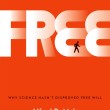
In his Philosophical Investigations, Ludwig Wittgenstein complained that “in psychology there are experimental methods and conceptual confusion.” What he meant is that academic psychologists too often interpret empirical evidence in light of unexamined and dubious metaphysical assumptions. What is presented as good science is really just bad philosophy. The recent spate of neuroscientific and psychological literature claiming to show that free will is an illusion provides a case in... Read More
Galileo was Right—But So Were His Critics
by Carl Olson
Filed under Christianity and Science, Galileo, Interviews
Ever since the seventeenth century, the celebrated “Galileo affair” has been one of the featured items on the list of dark moments in the history of Catholicism. That the Church mistreated the Italian astronomer—or at least misjudged his claims concerning the structure of the solar system—seems clear. Pope John Paul II, for example, apologized for the Church’s condemnation of Galileo in 1992. No one now disputes the fact that the earth revolves around the sun rather than the... Read More
Five Questions for Supporters of Gender Transitioning
by Trent Horn
Filed under Anthropology
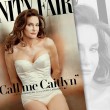
In light of the Vanity Fair cover story about Bruce Jenner’s decision to undergo a "gender transition" and current desire to be called Caitlyn Jenner, I thought it would be appropriate to look at five important questions those who support gender-transitioning need to answer. 1. What determines reality: facts or feelings? My wife used to work at a psychiatric hospital where it was standard procedure to not feed into a patient’s delusions. If a patient, for example, said he was a cat,... Read More