
Love and the Skeptic
by Carl Olson
Filed under Anthropology, Atheism

"The greatest of these," wrote the Apostle Paul, "is love" (1 Cor. 13:13). Many centuries later, in a culture quite foreign to the Apostle to the Gentiles, the singer John Lennon earnestly insisted, "All we need is love." Different men, different intents, different contexts. Even different types of "love." You hardly need to subscribe to People magazine or to frequent the cinema to know that love is the singularly insistent subject of movies, songs, novels, television dramas, sitcoms,... Read More
How TO Talk About God
by Stephen Bullivant
Filed under God's Nature

This is part two of a two-part series, adapted from Stephen Bullivant's new book, The Trinity: How Not to Be a Heretic (Paulist Press, 2015). Read part one here. "A time to speak" I ended my last post in this short series with the apparent affirmation that silence is the only appropriate mode for Christian thought and prayer. This is what is known as apophatic theology, the “negative way”, or – as I like to call it – the via Alison Krauss-a. Far be it from me to denigrate... Read More
How NOT to Talk About God
by Stephen Bullivant
Filed under God's Nature

This is part one of a two-part series, adapted from Stephen Bullivant's new book, The Trinity: How Not to Be a Heretic (Paulist Press, 2015). A Parable Here’s a cheerful thought: imagine that the only food you have ever eaten has been bought from a McDonald’s. All your knowledge of eating and drinking, and all your taste experiences have come from Big Macs, McNuggets, McFlurries, and those little carrot sticks you can get with Happy Meals. Every word or concept you have to... Read More
Bart Ehrman, Benedict XVI, and the Bible on the Question of Miracles
by Dr. Matthew Ramage
Filed under The Bible
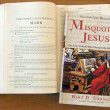
“At its core, the debate about modern exegesis is not a dispute among historians: it is rather a philosophical debate.” - Joseph Ratzinger (Pope Benedict XVI) My reflection today revolves around this poignant line from Joseph Ratzinger’s 1988 Erasmus Lecture in which he famously called for a “criticism of criticism.” In penning these words, the German cardinal was looking for a self-criticism of the modern, historical-critical method of biblical interpretation. On the part of... Read More
Exorcising Epistemology
by Matthew Becklo
Filed under Belief
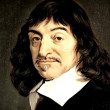
Two fantastic articles at Strange Notions in recent weeks have turned from the question of God to the question of the human self. In “Atheism and the Personal Pronoun,” Patrick Schultz explores what he calls a “doorstop” argument for the soul: under materialist atheism, we are mindless machines, but given that every one of us is inescapably a subjective “I,” materialist atheism looks false. In “Exorcizing the Ghost from the Machine,” Matthew Newland counters this argument... Read More
The Glory of Being Shut Up
by Marc Barnes
Filed under Architecture, The Church

“Christ prophesied the whole of Gothic architecture in that hour when nervous and respectable people (such people as now object to barrel organs) objected to the shouting of the gutter-snipes of Jerusalem. He said, 'If these were silent, the very stones would cry out.' Under the impulse of His spirit arose like a clamorous chorus the facades of the mediaeval cathedrals, thronged with shouting faces and open mouths. The prophecy has fulfilled itself: the very stones cry out.”... Read More
Exorcizing the Ghost from the Machine?
by Matthew Allen Newland
Filed under Anthropology

Not too long ago Patrick Schultz wrote a most interesting article for StrangeNotions.com on the nature of the “self” (or rather, the lack of one) if we attempt to describe human beings in material terms. Specifically, he says, when materialists try to explain the human person, “something quite puzzling (and frightening) occurs—human subjectivity disappears; that which makes humans human is explained away. The personal pronoun ‘I’ is swallowed up.” Shultz then illustrates... Read More
How Should We Speak of God? A Response to Daniel Linford
by Thomas M. Cothran
Filed under Atheism, The Existence of God

Last December, an article by Daniel Linford entitled "Do Atheists Reject the Wrong Kind of God? Not Likely" appeared at Scientia Salon. Certain recent "popular books,” according to Linford, have advanced a "mystical" notion of God, arguing that contemporary atheists have directed their disbelief only toward "smaller" conceptions of the divine. Three contemporaries are singled out: Karen Armstrong, John Haught, and David Bentley Hart. On what Linford denominates the "mystical" view, God... Read More
Stephen Fry, Job, and the Cross of Jesus
by Bishop Robert Barron
Filed under The Problem of Evil

The British writer, actor, and comedian Stephen Fry is featured in a YouTube video which has gone viral: over 5 million views as of this moment. As you may know, Fry is, like his British counterparts Christopher Hitchens and Richard Dawkins, a fairly ferocious atheist, who has made a name for himself in recent years as a very public debunker of all things religious. In the video in question, he articulates precisely what he would say to God if, upon arriving at the pearly... Read More
Atheism and the Problem of Beauty
by Joe Heschmeyer
Filed under Atheism, The Problem of Evil

A lot has been said about the “problem of pain.” Why, if God is both loving and all-powerful, is there still suffering in the world? The question is a challenge for Christians, as for all theists.Christians have some sense of why a loving God would permit suffering. It's easy enough to see that love is a good (the highest good, even), and that love requires free will. And it's just a small step from there to see how that free will could be used in some dastardly ways. Likewise, it's... Read More