Atheism and the Personal Pronoun
by Patrick Schultz
Filed under Anthropology, Atheism

The overwhelming majority of atheists today are also materialists. Ousting God implies an evacuation of all things “spiritual,” leaving behind only blind, brute, bits of matter. Whichever one arrives at first—whether materialism or atheism—is really inconsequential; one usually follows the other. Concerning galaxies and stars, materialism seems unthreatening. After all, these are material, natural phenomena that we can understand, explain, and model according to material causes;... Read More
Why Having a Heart of Gold is Not What Christianity is About
by Bishop Robert Barron
Filed under Morality, Religion

Many atheists and agnostics today insistently argue that it is altogether possible for non-believers in God to be morally upright. They resent the implication that the denial of God will lead inevitably to complete ethical relativism or nihilism. And they are quick to point out examples of non-religious people who are models of kindness, compassion, justice, etc. In point of fact, a recent article has proposed that non-believers are actually, on average, more morally praiseworthy than... Read More
Science Reveals Who We Are is Determined by How We Are
by Dr. Benjamin Wiker
Filed under Anthropology, Science
According to scientific orthodoxy, all living things were entirely determined by their genetic code. Hence the neo-Darwinian motto: DNA is destiny. But the latest news from researchers is that DNA is not destiny. As an article in Discover Magazine makes clear, the science of epigenetics has some humbling news for predestination scientists of genetics. Neither human beings nor any other animal is reducible to the nucleotide sequence in DNA. Instead, who we are is also determined by how... Read More
Why the Church is Ahead of Mathematicians on Ecumenical Dialogue
by Dr. Stacy Trasancos
Filed under Atheism, Religion, Science

A Stanford School of Engineering research team has developed a new mathematical model for how society becomes polarized, published in the March online edition Proceedings of the National Academy of Sciences. These models are similar to models that seek to predict the behavior of matter based on certain known modes of action, and they are always more difficult for human systems because humans are, inherently, unpredictable (that free will thing). However, they are not without benefit.... Read More
Does Everything Happen for a Reason?
by Mark Shea
Filed under God's Nature

A reader once wrote to me to ask: "I have a quick question, and I apologize if it’s awfully trite, but I haven’t been able to find a satisfactory answer after (admittedly, not-so-exhaustive) searching. Here it is: From the standpoint of the Catholic Church: does everything happen for a reason? If it does, it smacks a bit of predestination; if it doesn’t, does that mean that God is out of control or doesn’t care? Say a flower grows on a mountaintop and it dies, and... Read More
The Real War on Science
by Edward Dougherty
Filed under Science

A Google search returns about 350,000 hits for “war on science.” Glancing through the first hundred results reveals that this “war” consists mainly of political posturing. Little of it directly concerns science. Nevertheless, such rhetoric can result in auxiliary harm to science by inclining scientists to adhere to acceptable lines in order to further their careers or avoid castigation. The degree of harm will depend on the dedication of scientists and their intrinsic desire to... Read More
Divine Hiddenness and Human Disclosure
by Dominicans of the Province of St. Joseph
Filed under God's Nature, The Existence of God
The agnostic has said in his heart, “If God exists, why doesn’t He make it more obvious, such that it could not be doubted?” Surely, with so much riding on God’s existence (theism, the moral law, salvation, etc.), he could do a little more to make it obvious! Given the stakes, the fact that God fails to make his existence more patent is yet further proof that he doesn’t exist. Travis Dumsday summarizes this objection — often termed the argument from divine hiddenness — as... Read More
What Questions Do You Have for Catholics and Atheists?
by Brandon Vogt
Filed under News, Two Views

Today we're excited to introduce a new initiative at Strange Notions, and we need your help! We call it the "Two Views" Series. Here's how it works: Step 1 - Submit Questions In the comment box of this post, we invite you to ask a specific question you would like answered by both a Catholic and an atheist. The question should be limited and original. Nobody is going to be able to answer the question "Does God exist?" or "Is Christianity true?" in a short article. Instead, the questions... Read More
The Challenge of Ontological Disproofs
by Douglas Beaumont
Filed under God's Nature, The Existence of God

Dr. Peter Kreeft once noted that, “When Saint Thomas Aquinas wrote his great Summa Theologica, he could find only two objections to the existence of God, even though he tried to list at least three objections to every one of the thousands of theses he tried to prove in that great work” (Fundamentals of the Faith, p. 54). The two objections that Aquinas had in mind were the problem of evil and the apparent ability of science to explain everything without God. During my doctoral... Read More
Monogenism or Polygenism?: The Question of Human Origins
by Dr. Edward Feser
Filed under Anthropology, Evolution
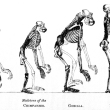
NOTE: Today we finish our two part series by Dr. Edward Feser exploring questions about evolution, creation, faith, and human origins. You can read the first part here. How can the doctrine of original sin be reconciled with what contemporary biology says about human origins? For the doctrine requires descent from a single original ancestor, whereas contemporary biologists hold that the genetic evidence indicates that modern humans descended from a population of at least... Read More