Whatever Happened to the Soul?
by Dr. Benjamin Wiker
Filed under Anthropology, Christianity and Science

Bad news, friends. You have no soul, according to a few professors at Fuller Theological Seminary. I say this after happening upon a copy of Whatever Happened to the Soul? Scientific and Theological Portraits of Human Nature, edited by Warren Brown, Nancey Murphy, and H. Newton Malony, all full-fledged Fullerian professors. They say the soul is now scientifically, and hence theologically passé. What happened to the poor soul, that it should suddenly be shuffled away? According to Murphy,... Read More
9 Things Salon.com Gets Wrong About Jesus
by Jon Sorensen
Filed under Jesus
Salon.com recently published an article by former Evangelical-turned-freethinker Valerie Tarico titled "9 things you think you know about Jesus that are probably wrong". There’s nothing particularly groundbreaking contained in her arguments, but they’ve been making the rounds in social media, and therefore worthy of a response. Below I respond to each of her major points. 1. Jesus was married, not single. This tired old claim has seemingly been refuted more times than the earth... Read More
The Self-Defeating Argument About Intelligence
by Dr. Stacy Trasancos
Filed under Anthropology, Science

Alexander Wissner-Gross, a physicist at Harvard University and the Massachusetts Institute of Technology, and Cameron Freer, a mathematician at the University of Hawaii at Manoa, have developed an equation to describe intelligent or cognitive behaviors. They suggest that intelligent behavior can be explained as an impulse to control events in the environment. The mathematics are rooted in the theory of thermodynamics. The model relies on entropy, the mathematically-defined thermodynamic... Read More
Dark Ages and Secularist Rages: A Response to Professor A.C. Grayling
by Carl Olson
Filed under Culture, History
A few years ago, Professor A.C. Grayling, professor of philosophy at Birkbeck College, University of London, wrote a column titled "The persistence of the faithful" in The Guardian. Grayling's column was ostensibly concerned with the apparent decision of the British government passing the "Equality Act," which would make it law that adoption agencies, including those run by the Catholic Church, would have to allow homosexual couples to use their adoption services. But Grayling's... Read More
Marin Mersenne: A Priest at the Heart of the Scientific Revolution
by Andrew Kassebaum
Filed under Christianity and Science
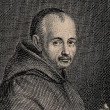
In late 1644, the Minim friar Marin Mersenne (1588-1648) travelled to Florence and assisted Evangelista Torricelli (1608-1647) in repeating his famous barometric experiment. When Mersenne returned to France, he shared Torricelli’s discovery with his network of correspondents, “giving rise to flourishing experimental and theoretical activities,”1 including the famous work on the weight of air conducted by Blaise Pascal (1623-1662). This is one of many contributions Mersenne would... Read More
How Modern Art Led Me to God
by Jennifer Fulwiler
Filed under Art

There was a recent controversy in Tacoma, Washington because the Tacoma Art Museum considered showing the work of an artist named David Wojnarowicz. Specifically, they wanted to show a video montage he put together that was pulled by the Smithsonian because it was too offensive. The Tacoma museum’s curator responded to critics by saying, “For someone to come and have to confront this image, it’s not going to be easy but art’s not easy.” Curious about what this non-easy art might... Read More
Why Something Rather than Nothing?
by Matt Fradd
Filed under Cosmology, The Existence of God

After a night of teenage exuberance, my friends and I would usually end up lying out on a country road, gazing up at the starlit Australian sky, discussing the meaning of it all. We considered ourselves nonreligious, and yet there was something (isn’t there?) about the enormity of the sky that humbled us, stirred us, inspired us to ask deep questions about, well, everything. We called these GLUE conversations—GLUE being an acronym for God, life, the universe, and everything. One of... Read More
Can We Make Sense of the World?
by Dr. Edward Feser
Filed under Cosmology

Is reality intelligible? Can we make sense of it? Or is the world at bottom an unintelligible “brute fact” with no explanation? We can tighten up these questions by distinguishing several senses in which the world might be said to be (or not to be) intelligible. To make these distinctions is to see that the questions are not susceptible of a simple Yes or No answer. There are in fact a number of positions one could take on the question of the world’s intelligibility –... Read More
Dressgate: Is Perception Reality?
by Matthew Becklo
Filed under Uncategorized
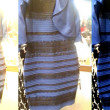
Philosophers are a maligned group these days. Neil deGrasse Tyson, for example, suggested that the paradigmatic philosophical question is not “Why is there something rather than nothing?” but “What is the sound of one hand clapping?” (Cute idea, in other words, but let’s not waste our time.) So when the internet exploded into a full-blown panic over whether a dress was white and gold or black and blue, I know philosophers everywhere slept well that night. No one knew, because... Read More
The Bible and the Question of Miracles: Towards a Christian Response
by Dr. Matthew Ramage
Filed under The Bible

My previous post at Strange Notions underscored the often-unacknowledged philosophical premises at work when believers and non-believers sit down to debate about things biblical. In the course of my argument, I pointed to a possible area of common ground for Catholics and agnostics/atheists. A survey of statements by thinkers as different as Benedict XVI and Bart Ehrman reveals an important agreement upon the reality that everyone carries their own philosophical presuppositions and that... Read More