Einstein and God
by Bishop Robert Barron
Filed under Christianity and Science
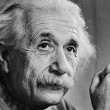
It was recently revealed that, toward the end of his life, Albert Einstein wrote a letter in which he dismissed belief in God as superstitious and characterized the stories in the Bible as childish. During a time when atheists have emerged rather aggressively in the popular culture, it was, to say the least, discouraging to hear that the most brilliant scientist of the twentieth century seemed to be antipathetic to religion. It appeared as though Einstein would have agreed with the Christopher... Read More
Big Bang or Big Bloom?
by Dr. Benjamin Wiker
Filed under Cosmology

In science today, we are under the tyranny of an image, the image of an explosion—the Big Bang. Ironically, this term was not derived from evidence but from contempt. Sir Fred Hoyle (1915-2001), the celebrated astronomer, was so incensed at the notion that the universe might have a beginning that he began to refer to proponents of this view as believing that the universe started in some kind of a “big bang.” He was quite surprised when the fires of his sarcasm, rather than withering... Read More
Why is There Something Rather Than Nothing?
by Dominicans of the Province of St. Joseph
Filed under Cosmology
Why is there something rather than nothing? This question, usually thought to fall strictly within the purview of philosophy and theology, has recently received attention in the world of popular science thanks to books by Stephen Hawking and Lawrence M. Krauss. Interestingly, these authors propose something similar to what Christians have always believed—that the universe came into existence out of nothing, or ex nihilo—but they think this could have happened spontaneously, or without... Read More
Evolution Doesn’t Select for Ethics
by Leah Libresco
Filed under Evolution
The second most incorrect thing people say about evolution is that it is the survival of the fittest. (The most incorrect award has to go to the claim "it doesn’t exist"). The problem with this framing is that it sets up a picture of evolution-as-craftsman, carefully scrutinizing genetic variations and selecting and nurturing the most promising variant. But evolution isn’t selecting for, it’s selecting against. Instead of survival of the fittest, it’s the persistence of the... Read More
Science and Faith: Two Paths of Knowledge
by Dr. Christopher Baglow
Filed under Science

Catholics acknowledge many paths which the human mind can traverse. One of those paths, the one that leads to knowledge of the natural universe, is called natural science, and another, the one that leads to knowledge of God and spiritual realities, is called faith. Both paths can be described as “thinking with assent.” That is, both are the use of reason by which one reaches a conclusion about reality—“thinking.” And both of them involve an assent to truth, an insight about... Read More
The Alleged Conflict Between Science and Faith (Video)
by Fr. Andrew Pinsent
Filed under Christianity and Science
Physicist and priest Dr. Andrew Pinsent exposes one of the great myths of our time, that science and faith cannot support each other. Father Pinsent is Research Director of the Ian Ramsey Centre for Science and Religion at Oxford University as well as holding a number of theological posts. He has completed research at CERN the world famous research centre in Switzerland and holds doctorates in particle physics and a degree in theology and a doctorate in philososophy. This presentation... Read More
How Does Theology Protect Science?
by Dr. Stacy Trasancos
Filed under Christianity and Science

The other day I made the statement, “Science is a sphere unto itself with its own methods, but it falls under the umbrella of theology.” One commenter asked how theology pertains to the sphere of science: “I don’t see how the two relate nor how science, most notably modern science including the laws of nature, physics and chemistry, could fall under the umbrella of knowledge of things divine?” Good question, and I promised her an answer. I would not have been able to answer that... Read More