How Contemporary Physics Points to God
by Fr. Robert Spitzer
Filed under Cosmology
Does modern physics provide evidence for the existence of God? This article presents a general overview of the answer to that question (a more thorough treatment may be found in my recent book, New Proofs for the Existence of God). I will divide the topic into three parts: 1. Can Science Give Evidence of Creation and Supernatural Design? 2. What is the Evidence for a Beginning and What are the Implications for Creation? 3. What is the Evidence of Supernatural Intelligence from Anthropic... Read More
When Something Becomes Nothing
by Dr. Edward Feser
Filed under Cosmology

NOTE: Dr. Feser's contributions at Strange Notions were originally posted on his own blog, and therefore lose some of their context when reprinted here. Dr. Feser explains why that matters. A friend recently asked me to comment on this little video from New Scientist, which summarizes some of the claims made in an article from the July 23 issue on the theme “Why is there something rather than nothing?” The magazine has been sitting on my gargantuan “to read” stack... Read More
Modern Physics, Ancient Faith: An Interview with Physicist Dr. Stephen Barr
by Brandon Vogt
Filed under Christianity and Science

Some news hooks are irresistible, even when they're false or at least incomplete. Case in point: the alleged conflict between science and religion. Is science opposed to religion? The answer depends in large measure on what you mean by religion. If your "religion" is, say, astrology, then you could say there's a conflict between science and "religion". The science of astronomy does conflict with the "religion" of astrology. Probably most people who speak of a conflict between science and... Read More
Would God Create a Gigantic Universe?
by Trent Horn
Filed under Cosmology, God's Nature
Some critics claim that if God existed, then the universe would not be 13.7 billion years old or be 93 billion light years across as it is currently. Hasn’t science shown that this immense universe was not created for us but that we are an inconsequential part of an uncreated universe? The problem with this argument is that science can show us only the universe’s dimensions; it cannot reveal any meaning or lack of meaning inherent in those dimensions. In response to this argument,... Read More
The Deflation of Inflationary Theory
by Dr. Benjamin Wiker
Filed under Cosmology
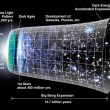
If you study the history of science long enough, you realize that you've got to ask two questions about any scientific theory, especially the biggest and most grand of them. What is it? Why was it put forth? The two almost invariably go together. We cannot truly grasp what the theory is, until we understand the motives of those who developed it. Now here the obvious objection would be this. The what of a theory is really the only question, because the why is so obvious as not to... Read More
Darwin’s Blind Spot
by Gerard M. Verschuuren
Filed under Evolution
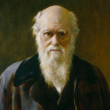
It is a well-known fact that Charles Darwin, the author of that famous, and at the same time infamous, book entitled On the Origin of Species, used to be all over the religious map during his lifetime (1809-1882). Darwin’s personal beliefs remain ambiguous. I think what expresses his ambiguity best is what he wrote in a letter to J.D. Hooker (1861): “My theology is a simple muddle; I cannot look at the universe as the result of blind chance, yet I can see no evidence of beneficent... Read More
Did the Church Teach the Earth was Flat?
by Jon Sorensen
Filed under Christianity and Science
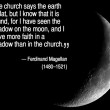
When I was young I was taught in school that Christians believed the Earth was flat. In this view, it was not until Christopher Columbus’ historic journey to the “New World” that the Church became forced to accept this as fact and do away with its false belief. The idea that Christians believed in a flat Earth has been taught in school textbooks, short films, and is believed by many even today. This notion of history stuck with me through my years as an atheist, during which I'd... Read More
A Mind Prepared for Wonder
by Dominicans of the Province of St. Joseph
Filed under Science

I enjoy reading Edward O. Wilson much more than Richard Dawkins, and recently I started to ask myself why this might be. Both are good writers and present difficult scientific concepts in easy-to-understand language. Both work in the controversial area of sociobiology and the evolution of human beings. Both are post-Christian thinkers with little interest in the nuances and delicacies of theological reasoning. What separates these two men? And, even when I don’t agree with him, what... Read More
Did Dinosaurs Die Before the Fall?
by Jimmy Akin
Filed under Christianity and Science, Evolution, Science

St. Paul tells us: "For as by a man came death, by a man has come also the resurrection of the dead. For as in Adam all die, so also in Christ shall all be made alive" (1 Cor. 15:21-22). Does this mean that there was no death--of any kind--before the Fall of Man? Would that mean that no animals, plants, or microbes died? What about animals that are carnivores? Were lions vegetarians? How about alligators? Or sharks? How about carnivores like Tyrannosaurus Rex? Let's... Read More
Did Pope Benedict Really Dismiss Evolution as ‘Science Fiction’?
by Dr. Stacy Trasancos
Filed under Evolution

In a recent letter to Piergiorgio Odifreddi, Italian atheist and mathematician, Pope Emeritus Benedict XVI used the term "science fiction." Odifreddi is the author of the 2011 book Dear Pope, I'm Writing to You, a critique of Benedict's theological writings. Benedict's letter is a response to that book, extracts of which were recently published in the Italian daily newspaper La Repubblica. In Odifreddi's book he referred repeatedly to theology as "science fiction." Benedict pointed out... Read More