The Road from Atheism: Dr. Edward Feser’s Conversion (Part 2 of 3)
by Dr. Edward Feser
Filed under Atheism, Conversion
NOTE: On Monday we shared Part 1 of Dr. Edward Feser's conversion story from atheism to theism. Today we're posting Part 2 and on Monday we'll post Part 3.We'd also like to note that Dr. Feser's contributions at Strange Notions were originally posted on his own blog, and therefore lose some of their context when reprinted here. Dr. Feser explains why that matters. Not that that led me to give up naturalism, at least not initially. A more nuanced, skeptical naturalism was... Read More
Faith, Reason, and God: A Socratic Dialogue
by Dr. Peter Kreeft
Filed under Faith

NOTE: This fictitious dialogue takes place between two friends, Chris, a Catholic, and Sal, a sincere skeptic, and centers on some basic questions here at Strange Notions regarding faith, reason, and the existence of God. Sal: Chris, before we go any further in our conversations about Christianity, I have to ask you a very basic question. Chris: Ask away. Sal: Do you think this is going to get us anywhere, arguing about religion? Chris: What you mean by "arguing"? Sal: Fighting... Read More
Why Aren’t You Naked?
by Marc Barnes
Filed under Anthropology
I’m curious as to why man is in the habit of wearing clothes, when no other animal has been spotted with even the smallest, most insignificant of socks. We could say it’s the fault of the cold, but humans wear clothes at the Equator. We could take a Darwinian tactic and argue that clothes are hygienic—and thus the people who wore clothes outlived and out-reproduced those who ran young, wild and free—but this assumes too much. A soiled rag around the crotch seems far less healthy... Read More
Woody Allen the Moralist
by Bishop Robert Barron
Filed under Anthropology
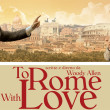
Who would have thought that Woody Allen, who twenty years ago was separating from his longtime girlfriend to notoriously marry her adopted daughter, would emerge as a defender of what can only be called traditional morality? And yet, I find that conclusion unavoidable after viewing the writer-director’s recent offering, “To Rome With Love.” This film is the latest in a series of Woody Allen movies—“Match Point,” "Vicky Christina Barcelona,” “Midnight in Paris”—celebrating... Read More
Is Reality Just What We Think It Is?
by Dr. Benjamin Wiker
Filed under Anthropology
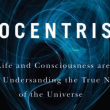
The human mind, by its nature, strives to know everything. But just because we have the desire to know everything, our reach often exceeds a sure grasp of reality, and we fall into fantasy. So it is with Robert Lanza's Biocentrism: How Life and Consciousness are the Keys to Understanding the True Nature of the Universe which offers a new and elaborate form of solipsism. The universe and everything in it, Lanza asserts confidently, exists because we perceive it. In his words, "the observer... Read More
Free-Thinking: Doctrine or Illusion?
by Dr. Stacy Trasancos
Filed under Anthropology
Recently there was an excellent question in the Strange Notions comment boxes from Rob Tish. He wanted to know what the Bible means when it says God created man in His own image: "If God is so fundamentally and essentially different from us, then in what sense are we made in His image?" In a word: We are free-thinkers. Since invoking that word requires some explanation, the response is three-fold. First is the answer to Rob's question, with explanation and reference to the Catechism of... Read More
What Faith Is and What it Isn’t
by Bishop Robert Barron
Filed under Faith
The Protestant theologian Paul Tillich once commented that “faith” is the most misunderstood word in the religious vocabulary. I’m increasingly convinced that he was right about this. The ground for my conviction is the absolutely steady reiteration on my Internet forums of gross caricatures of what serious believers mean by faith. Again and again, my agnostic, atheist, and secularist interlocutors tell me that faith is credulity, naïvete, superstition, assent to irrational nonsense,... Read More
Catholicism and Free Thought
by Fr. Dwight Longenecker
Filed under Anthropology, Religion, Uncategorized

Many people believe that Catholicism, because it is a dogmatic religion, stifles free thought and free speech. “How nice for you,” some will say to a Catholic convert, “Now that you’re a Catholic, you won’t have to think anymore.” Or, “It must be nice to be a Catholic and have such ‘certainty.’” This is said with a snuffling, cynical laugh because by ‘certainty’ they often mean that one has become a mindless robot—a Kool Aid drinking cult member following... Read More
The Case for Life After Death
by Dr. Peter Kreeft
Filed under Anthropology
Can you prove life after death? Whenever we argue about whether a thing can be proved, we should distinguish five different questions about that thing: Does it really exist or not? "To be or not to be, that is the question." If it does exist, do we know that it exists? A thing can obviously exist without our knowing it. If we know that it exists, can we be certain of this knowledge? Our knowledge might be true but uncertain; it might be "right opinion." If it is certain, is there... Read More
Know Thyself: The Insolvable Puzzle
by Dr. Peter Kreeft
Filed under Anthropology
Though agape [i.e. selfless love] comes from God, it resides in our free will as human beings. Its home is not the body or the feelings, or even the intellect, but the will. True, the intellect has to work with it. But it is not the intellect that loves, any more than it is the light in the operating room that performs the surgery.Agape may be aided by seeing, accompanied by feeling, and accomplished by doing, but it is essentially an act of choosing, an act of free will. If God exists,... Read More