Turning the Problem of Evil On Its Head
by Joe Heschmeyer
Filed under Objective Morality, The Problem of Evil

Many atheists are fond of using the argument from evil to debunk the notion of God. It goes something like this: If God is all-powerful (omnipotent), He could stop evil. If God is all-loving (omnibenevolent), He would stop evil if He could. Therefore, if an omnipotent, omnibenevolent God existed, evil would not. Evil exists; therefore, an omnipotent, omnibenevolent God does not. Another variation of the argument was put forward by the Greek philosopher Epicurus, centuries before the... Read More
Why We Should Be Cautious Using the Big Bang Argument
by Jimmy Akin
Filed under Atheism, Cosmology, God, Science, The Existence of God
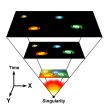
Since it was proposed by Fr. Georges Lemaître, the Big Bang has been common in discussions of the existence of God. The reasons are obvious. The Big Bang looks like a plausible beginning for the physical universe. Things that begin need causes. The beginning of the physical universe would need a cause, which would seem to lie outside the physical universe. This coheres well with the Christian claim that God is a non-physical being who created the physical universe. The argument has been... Read More
Unmoved Mover for Unmoved Doubters
by Dr. Stacy Trasancos
Filed under The Existence of God
Already at Strange Notions, there have been long and intense discussions among Catholics, agnostics, and atheists that either point to, or directly involve, the logical proofs of God’s existence. Here is a scaled-down version of the Unmoved Mover proof that St. Thomas Aquinas wrote in the Summa Contra Gentiles. I am not suggesting that any words should be altered, but rather attempting to pull out the key points so someone new to reading his writing has a map through the argument. The... Read More
A Cinematic Tour of the Problem of Evil
by Matthew Becklo
Filed under The Problem of Evil

Is God willing to prevent evil, but not able? Then he is not omnipotent. Is he able, but not willing? Then he is malevolent. Is he both able and willing? Then where does evil come from? Is he neither able nor willing? Then why call him God? — Epicurus Gruesome and tragic headlines from the past few months have thousands of people of faith scratching their heads, asking: why does God allow this evil to happen? Isn't he supposed to be all-loving and all-powerful? The question... Read More
Is God’s Omnipotence Self-Refuting?
by Joe Heschmeyer
Filed under God's Nature

The University of Cambridge has a series called Investigating Atheism, which calmly and fairly lays out the most popular arguments for atheism. One of the arguments had a twist I'd never heard before, so I thought I'd go ahead and respond to it: Another traditional argument claims that there is a logical incoherence involved in certain concepts of God. This can either rely on an internal contradiction in a single attribute, or else in a contradiction in the combination of divine attributes.... Read More
Has Stephen Hawking Made God Unnecessary?
by Trent Horn
Filed under The Existence of God
A few weeks ago, Stephen Hawking delivered a lecture at the California Institute of Technology titled "The Origin of the Universe," and you’re likely to have heard about it because, according to mainstream media outlets, Hawking has put God out of a job. In an article headlined “Stephen Hawking lays out case for Big Bang without God,” NBC News describes the presentation: Stephen Hawking began the event by reciting an African creation myth, and rapidly moved on to big questions... Read More
Where Did God Come From?
by Fr. Robert Spitzer
Filed under The Existence of God
The problem of something coming from nothing arises out of three kinds of realities which require a cause for their existence. One, realities that have a beginning; two, realities which are conditioned in their existence (dependent for their existence on something else—the fulfillment of other conditions); and three, realities that are conditioned by time. I am restricting my comments here to realities which have a beginning. If you are interested in conditioned realities, read chapter... Read More
God, Obligation, and the Euthyphro Dilemma
by Dr. Edward Feser
Filed under God's Nature

NOTE: Dr. Feser's contributions at Strange Notions were originally posted on his own blog, and therefore lose some of their context when reprinted here. Dr. Feser explains why that matters. Does God have obligations to us? No, He doesn’t. But doesn’t that entail that He could do just any old thing to us? No, it doesn’t. But how can that be? To see how, consider first another, related false dilemma: the famous Euthyphro problem. The Euthyphro dilemma goes like this:... Read More
20 Arguments For God’s Existence
by Dr. Peter Kreeft
Filed under The Existence of God
1. The Argument from Change 2. The Argument from Efficient Causality 3. The Argument from Time and Contingency 4. The Argument from Degrees of Perfection 5. The Design Argument 6. The Kalam Argument 7. The Argument from Contingency 8. The Argument from the World as an Interacting Whole 9. The Argument from Miracles 10. The Argument from Consciousness 11. The Argument from Truth 12. The Argument from the Origin of the Idea of God 13. The Ontological Argument 14. The Moral Argument 15. The... Read More