Debunking the “One God Further” Objection
by Dr. Edward Feser
Filed under The Existence of God
Philosopher Bill Vallicella recently replied to what might be called the “one god further” objection to theism. Bill sums up the objection as follows: "The idea, I take it, is that all gods are on a par, and so, given that everyone is an atheist with respect to some gods, one may as well make a clean sweep and be an atheist with respect to all gods. You don't believe in Zeus or in a celestial teapot. Then why do you believe in the God of Isaac, Abraham, and Jacob?" Or as the Common... Read More
Did the Accounts of Jesus Evolve?
by Joe Heschmeyer
Filed under Historicity
Biblical skeptics often surmise that the earliest New Testament books tell a very different story than the later books: that the story of Jesus grew with time, becoming more and more incredible, and less and less historical. In other words, the New Testament evolved from history to religious mythology. Recently, I've seen this argument raised about both the Resurrection and the divinity of Christ. First, retired Episcopal Bishop John Shelby Spong (who denies the Resurrection) attacked... Read More
Richard Carrier’s Deeply Flawed Argument To Show God Is Unlikely
by Dr. William M. Briggs
Filed under The Existence of God
In the comment section to an earlier piece of mine on Strange Notions, Richard Carrier invited me to “interact” with him through his article “Neither Life nor the Universe Appears Intelligently Designed”, found in The End of Christianity, edited by John W. Loftus. This article is the “interaction” Carrier requested. I apologize for its delay. Introduction Richard Carrier’s argument to show that God probably didn’t create the universe, and therefore He probably... Read More
Science or Myth: A False Dichotomy
“Reality is everything that exists. That sounds straightforward, doesn’t it? Actually it isn’t.” Thus begins Professor Richard Dawkins’ recent book, The Magic of Reality. In order to explain reality, Professor Dawkins takes us on a tour of modern science by contrasting its explanations with those we find in myths and fables: “These are the stories we all remember with fondness from our childhood, and many of us still enjoy when served up in a traditional Christmas... Read More
The Contingency Argument for God
by Dr. Peter Kreeft
Filed under The Existence of God

Many consider the argument for God from contingency to be one of the strongest. The basic form is simple: If something exists, there must exist what it takes for that thing to exist. The universe—the collection of beings in space and time—exists. Therefore, there must exist what it takes for the universe to exist. What it takes for the universe to exist cannot exist within the universe or be bounded by space and time. Therefore, what it takes for the universe to exist must transcend... Read More
It’s That Simple: The First Cause and Occam’s Razor
by Steven Dillon
Filed under The Existence of God

One objection to First Cause arguments is that they make superfluous attributions: surely in any steady hand Occam’s razor would deliver a much more modest looking First Cause than God. In my last post, I argued that this objection is fallacious in as much as it begs the question against Classical Theism, for which the First Cause and its attributions are indivisible (and thus hardly capable of being whittled by Occam). But, this doesn’t show that there is a First Cause, or that Classical... Read More
Did Jesus Really Rise from the Dead?
by Fr. Dwight Longenecker
Filed under The Resurrection
Last week I wrote a post here on David Hume, miracles, and the resurrection of Jesus. Some of the commenters took issue with my claim that "all the alternatives to the fact of the resurrection of Jesus Christ from the dead are more incredible than the miracle." I'd like to elaborate on that here. Christians claim that the historical human being Jesus of Nazareth was executed then physically rose from the dead and stayed alive. He was seen by many people and then was seen to vanish into... Read More
David Hume, Miracles, and the Resurrection
by Fr. Dwight Longenecker
Filed under The Existence of God, The Resurrection
Most Catholics and atheists agree that if God does not exist, then the material world must be a closed system. If there is no God, the world is self-creating and self-reliant. If there is no God, then there cannot be interruptions in nature. The material world works according to the laws of physics, and even if there are mysteries that cannot presently be explained, they will be one day. In fact, if there is no God, then the physical world must work according to the laws of nature and... Read More
Scientific Geniuses and Their Jesuit Collaborators
by Andrew Kassebaum
Filed under Christianity and Science
Herbert Butterfield, the influential twentieth-century historian, identified the Scientific Revolution as “one of the great episodes in human history,” which, along with the rise of the empires of Alexander the Great and ancient Rome, deserves a place “amongst the epic adventures that have helped to make the human race what it is.”1 Numerous Catholic scientists, both laymen and churchmen alike, made valuable contributions to science before, during, and after the Scientific Revolution. The... Read More
The Common Consent Argument for God
by Dr. Peter Kreeft
Filed under The Existence of God
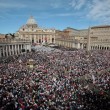
This proof for God is in some ways like the argument from religious experience and in other ways like the argument from desire. It argues that: Belief in God—that Being to whom reverence and worship are properly due—is common to almost all people of every era. Either the vast majority of people have been wrong about this most profound element of their lives or they have not. It is most plausible to believe that they have not. Therefore it is most plausible to believe that God exists. Everyone... Read More