God, Sex, and Bono
by Christopher West
Filed under The Incarnation

As demonstrated in his encyclical God Is Love, and more recently at the Fifth World Meeting of Families in Valencia, Spain, Pope Benedict XVI, like John Paul II before him, is intent on helping the world see the connection between divine love (agape) and sexual love (eros). To help us reflect on these themes, I’d like to turn to what may seem an unlikely source: Bono, lead singer of U2, which I consider the biggest rock band in the world. You’ve probably heard Bono sing about that... Read More
Big Bang or Big Bloom?
by Dr. Benjamin Wiker
Filed under Cosmology

In science today, we are under the tyranny of an image, the image of an explosion—the Big Bang. Ironically, this term was not derived from evidence but from contempt. Sir Fred Hoyle (1915-2001), the celebrated astronomer, was so incensed at the notion that the universe might have a beginning that he began to refer to proponents of this view as believing that the universe started in some kind of a “big bang.” He was quite surprised when the fires of his sarcasm, rather than withering... Read More
The Galileo Controversy
by Catholic Answers
Filed under Galileo, Uncategorized
It is commonly believed that the Catholic Church persecuted Galileo for abandoning the geocentric (earth-at-the-center) view of the solar system for the heliocentric (sun-at-the-center) view. The Galileo case, for many anti-Catholics, is thought to prove that the Church abhors science, refuses to abandon outdated teachings, and is not infallible. For Catholics, the episode is often an embarrassment. It shouldn’t be. This article provides a brief explanation of what really happened to... Read More
Why is There Something Rather Than Nothing?
by Dominicans of the Province of St. Joseph
Filed under Cosmology
Why is there something rather than nothing? This question, usually thought to fall strictly within the purview of philosophy and theology, has recently received attention in the world of popular science thanks to books by Stephen Hawking and Lawrence M. Krauss. Interestingly, these authors propose something similar to what Christians have always believed—that the universe came into existence out of nothing, or ex nihilo—but they think this could have happened spontaneously, or without... Read More
Philosophy, Evidence, and Faith: The Conversion of John C. Wright
by John C. Wright
Filed under Conversion, Faith
On Easter 2008, the renowned sci-fi writer John C. Wright entered the Catholic Church after a lifetime of atheism. This is his conversion story: My conversion was in two parts: a natural part and a supernatural part. Here is the natural part: first, over a period of two years my hatred toward Christianity eroded due to my philosophical inquiries. Rest assured, I take the logical process of philosophy very seriously, and I am impatient with anyone who is not a rigorous and trained... Read More
Evolution Doesn’t Select for Ethics
by Leah Libresco
Filed under Evolution
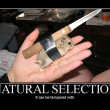
The second most incorrect thing people say about evolution is that it is the survival of the fittest. (The most incorrect award has to go to the claim "it doesn’t exist"). The problem with this framing is that it sets up a picture of evolution-as-craftsman, carefully scrutinizing genetic variations and selecting and nurturing the most promising variant. But evolution isn’t selecting for, it’s selecting against. Instead of survival of the fittest, it’s the persistence of the... Read More
Jesus Would Have Been an Atheist?
by Brandon Vogt
Filed under Historicity

In a recent interview with The Guardian, popular atheist Richard Dawkins made a strange and audacious claim: "I wrote [an] article called ‘Atheists for Jesus,’ I think it was...Somebody gave me a t-shirt: ‘Atheists for Jesus.’ Well, the point was that Jesus was a great moral teacher and I was suggesting that somebody as intelligent as Jesus would have been an atheist if he had known what we know today." His proposal, of course, gives rise to the question, what new... Read More
Should children decide their own beliefs?
by Devin Rose
Filed under Uncategorized
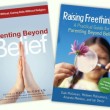
I grew up in a home where my mother and father, both fallen-away Christians, wanted to let my sister and I “decide our own beliefs.” The idea, of course, is that we are blank slates and my parents would not indoctrinate me into a particular religion, thus letting me collect data and inputs over time and eventually grow up and choose my own beliefs or worldview. I can see how someone would think this makes sense. But in fact my sister and I both became agnostics, mirroring the (un)belief... Read More
Where Did God Come From?
by Fr. Robert Spitzer
Filed under The Existence of God
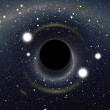
The problem of something coming from nothing arises out of three kinds of realities which require a cause for their existence. One, realities that have a beginning; two, realities which are conditioned in their existence (dependent for their existence on something else—the fulfillment of other conditions); and three, realities that are conditioned by time. I am restricting my comments here to realities which have a beginning. If you are interested in conditioned realities, read chapter... Read More
Douglas Wilson vs. Christopher Hitchens: A Catholic Perspective
by Dr. Bryan Cross
Filed under New Atheists

I just finished teaching Aristotle’s Nicomachean Ethics this semester. This is the tenth year I have taught it, and every time I teach it, I more deeply appreciate its truth and importance. One reason for its importance can be found in the Wilson-Hitchens video that I discuss below. Twenty years ago, I believed what is called divine command theory.[ref]Divine command theory is the notion that what makes a good action good, and what makes an evil action evil, is fundamentally a command... Read More