Learning Morality from Bill and Ted
by Brandon Vogt
Filed under Christianity and Science, Morality
Early in this review series, I mentioned how Sean Carroll's new book, The Big Picture: On the Origins of Life, Meaning, and the Universe Itself (Dutton, 2016), gradually becomes weaker as you move through the chapters. It starts off strong and invigorating as he talks about cosmology and fundamental physics, his specialities. But as he moves into the philosophy of mind, meaning, and morality, he gets a bit wobbly. Moving From Ought to Is That's evident especially in his chapter on "What... Read More
Is Free Will Real or Are We All Determined?
by Brandon Vogt
Filed under Christianity and Science

Throughout Sean Carroll's best-selling book, The Big Picture: On the Origins of Life, Meaning, and the Universe Itself (Dutton, 2016), Carroll seems comfortable holding two apparently contradictory views. This has been show throughout our review series. For example, he's fine both believing that causality is illusory (at the fundamental level of reality) and true (at the macroscopic level.) We see this again in the chapter he dedicates to free will, which begins with this assessment (emphasis... Read More
Why Does the Universe Exist? Atheist Physicist Sean Carroll Answers…
by Brandon Vogt
Filed under Christianity and Science, Cosmology
I have to admit, when I first opened Sean Carroll's new book, The Big Picture: On the Origins of Life, Meaning, and the Universe Itself (Dutton, 2016) I immediately flipped to chapter 25, titled "Why Does the Universe Exist?" For many thinkers, ancient and modern, this is the philosophical question: why is there something rather than nothing? Your answer to this question drives your answers to most other big questions, including those about God, meaning, morality, and more. So I was... Read More
The Power and Danger of Bayes’ Theorem
by Brandon Vogt
Filed under Christianity and Science, The Existence of God
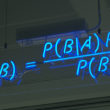
I've noted many flaws and points of confusion in Sean Carroll's new book, The Big Picture: On the Origins of Life, Meaning, and the Universe Itself (Dutton, 2016), but one of the strongest sections is its explanation of Bayes' Theorem. The Theorem is a quantitive way to express confidence in certain beliefs. It requires assigning credences (or probabilities) to events or statements, and then tweaking them based on new information. For example, suppose you're wondering whether a randomly... Read More
Is the Passage of Time Real or Just an Illusion?
by Brandon Vogt
Filed under Christianity and Science, Cosmology

One of the main targets of Sean Carroll's new book, The Big Picture: On the Origins of Life, Meaning, and the Universe Itself (Dutton, 2016), is causality. Like many naturalists, he sees where the causal chain leads—a series of contingent causes demands a necessary First Cause. So if you want to avoid a First Cause, you must get rid of causality. As discussed in an earlier post, Carroll's first attempt appealed to the conservation of momentum. It wasn't clear how that principle... Read More